Recent Developments in Layered Double Hydroxides as Anticorrosion Coatings
To date, one of the main problems associated with the engineering application of metallic materials is corrosion protection. To increase…

To date, one of the main problems associated with the engineering application of metallic materials is corrosion protection. To increase…
The removal of pollutants from wastewater is of primary importance for the environment and human health. The materials that we…
Anion Exchange Membranes (AEMs) are promising materials for electrochemical devices, such as fuel cells and electrolyzers. However, the main drawback…

Hydrothermal carbonization (HTC) serves as a sustainable method to transform pine needle waste into nitrogen-doped (N-doped) hydrochars. The primary focus…

Anion-conducting organic–inorganic polymers (OIPs), constructed using metal–organic framework (MOF)-like structures with non-toxic, non-rare catalytic metals (Fe3+, Zr4+), have been developed.…

Anion Exchange Membrane Fuel Cells (AEMFCs) are promising clean energy devices. To align their developmentwith sustainability goals, this study explores…

Hybrid polymers based on polysulfone (PSU), covalently functionalized with zirconium-organic moieties, were developed and applied for arsenic removal from wastewater.…

Nanocomposites containing B,N-codoped carbon quantum dots (CQDs) and an anion exchange ionomer based on poly(2,6-dimethylpolyphenyleneoxide) with trimethylammonium groups on long…

The combination of ion exchange membranes with carbon quantum dots (CQDs) is a promising field that could lead to significant…
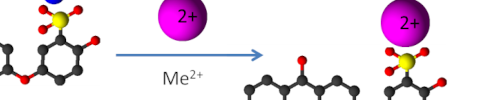
Ion exchange polymers were used for mercury and lead ions removal in water. The heavy metal ion concentration was analyzed…

Heteroatom-doped carbon quantum dots (CQD) were synthesized by 3 preparation methods: pyrolysis, microwave irradiation, hydrothermal synthesis. Their properties as electrocatalysts…
Abstract The protection of zinc anodes in zinc–air batteries (ZABs) is an efficient way to reduce corrosion and Zn dendrite…